
Heavy Duty Recovery Tow Straps
Recovering heavy assets in commercial and industrial environments is a high-stakes task that requires choosing the correct methodology, Traction or Momentum.
While momentum-based recovery is a highly effective technique for specific scenarios, many professional operations in agriculture, mining, and construction prioritizeStatic Tractionfor extracting loaded or sensitive machinery.
Our heavy-duty recovery straps are designed exclusively for static traction, the safest extraction method for heavy machinery when applied with the correct technique and sizing. Manufactured from high-tenacity, low-stretch polyester (< 6% elongation), these straps provide the winch-style precision needed to utilize the raw torque of a recovery vehicle without the dangerous shock-loads that cause equipment failure.
The integrity of a recovery system depends on the "Source of Power" principle. We size our collection based on the recovery vehicle’s maximum drawbar pull, ensuring a professional 3:1 or 5:1 safety margin is maintained. Whether utilized for steady towing of immobilized vehicles, deep-field extraction, or as a static winch line extension, these straps provide a predictable, controlled transmitter of force for the most demanding job sites.
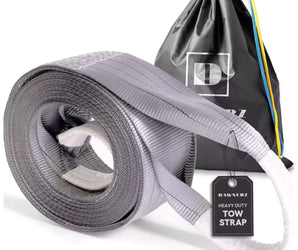
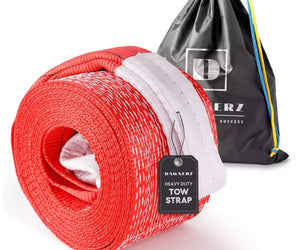
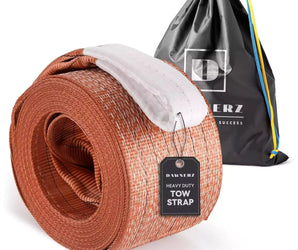
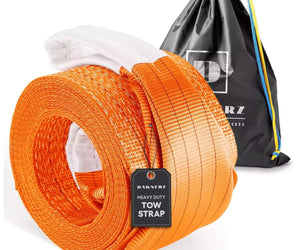
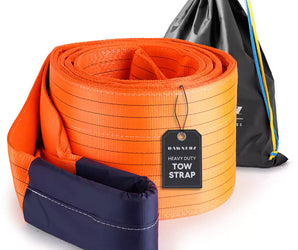
Different Types of Straps for Towing and Recovery
Choosing the right strap isn’t as simple as picking a size. Polyester tow straps, nylon recovery (snatch) straps, and recovery tow straps are built for different vehicle weights and pulling situations. The FAQs below break down when and why you’d use each one, so you can match the right gear to the job.
Tow Straps
General consumer grade tow straps, made from standard polyester webbing, usually a flat web design for vehicles up to 10,000 lbs. Standard sizes are usually 2 - 4 inch wide.
Recovery Straps
Generally a consumer grade product, almost identical to the tow strap, the only difference is the material used. Most recovery straps are made from nylon webbing, which has a higher elongation than polyester. Standard sizes are usually 2 - 6 inch wide.
Recovery Tow Straps
Recovery Tow Straps are without doubt one of the safest and most reliable types of straps, especially for heavy duty vehicles, such as tractors, heavy plant, and commercial vehicles. They have much higher break strengths, and a lower stretch under load than nylon.
Dawnerz Recovery Tow Straps
We use a specialist industrial grade polyester webbing for all our products. This along with our stitching techniques, creates a slightly higher stretch under load than standard polyester tow straps, allowing for a little extra safety when using them to recover vehicles. Our webbing is certified and our break strengths range from 70,000 to 380,000 lbs.
This doesn't mean they can be used like a snatch strap or kinetic recovery rope (KERR), they are for controlled, predictable recoveries, identical in technique to how you would operate a winch strap.
What are the Benefits of Recovery Tow Straps
There are several key benefits to using a specialist recovery tow strap
- Polyester maintains 100% of its tensile strength when wet - Nylon loses 20-30% of its strength
- The lower stretch provides a much safer, more controlled tow or recovery
- After vehicle extraction, you can use the same strap to tow your vehicle
- The wider 2 and 4 ply webbing distributes the load more evenly, reducing the risk of strap failure
Learn More About Safe Recovery
Check out our featured blog post on how to use recovery tow straps for heavy duty vehicles.
How to Use a Heavy Duty Recovery Tow Strap
Heavy Duty recovery is far more dangerous than pulling a car from a ditch. This guide covers all aspects and safe use of recovery tow straps for heavy duty vehicles.
How do I know what size recovery tow strap to buy?
For polyester recovery tow straps, you need to determine the GVW (of the stuck vehicle). Then apply a safety factor to this, industry standards generally range from 3:1 or 5:1
Example
- GVW 20,000 lb - Safety Factor 3:1 - 20,000 x 3 = 60,000 lb break strength
- GVW 20,000 lb - Safety Factor 4:1 - 20,000 x 4 = 80,000 lb break strength
- GVW 20,000 lb - Safety Factor 5:1 - 20,000 x 5 = 100,000 lb break strength
We never recommend using a safety factor lower than 3 x the vehicles weight when used for recovery situations.
Quick Inspection Checklist
Whether you're using tow straps or recovery straps, make sure before each use, you thoroughly inspect your straps for:
- Cuts, tears, or abrasions along the webbing
- Signs of UV damage or material degradation
- Damaged or compromised connection points
- Evidence of chemical exposure or contamination
- Previous repairs or modifications (never use repaired straps)
Important: Never use a damaged strap, tie knots in the webbing, or drag it across abrasive surfaces. These actions significantly compromise the strap's integrity and create safety hazards.
FAQs - Understand the Differences
Understanding the differences between each type of strap is essential for both a successful recovery, and also the safety of the people involved. No matter how good the strap is, it wont perform if used in the wrong environment or with the wrong technique.
How strong should a towing strap be?
It needs to be strong enough to pull the vehicle that's stuck or immobilized. Simple way to calculate the straps strength, take the stuck vehicle, multiply its weight by a minimum of 3 x - that's the minimum break strength required. If you are in bad situations, regularly stuck in deep mud or sand, multiply the GVW x 5 for added security and safety
What is better, a tow strap or a recovery strap?
There is actually no better choice. Each type of strap or recovery rope has their own unique benefits, as well as their limitations. In our professional opinion, tow straps are great for smaller, lighter vehicles, recovery straps serve a purpose, but can lose significant strength when wet. And as we know, most people get stuck in winter not the middle of summer! Recovery tow straps cover all bases, towing, recovery, and maintain strength. But use them like a snatch or kinetic strap, are they will likely fail
Are tow straps stronger than chains?
Well they can be. Of course if you buy a low strength, cheap tow strap, then likely not. If you buy a high quality, well manufactured tow or recovery strap, with certified webbing, then yes, they can be stronger than chains, as well as lighter, and safer to use
Do I Need Cordura or Reinforced Eyes?
Here's the thing, anyone who is using any type of recovery strap or rope correctly and safely, should always be using a shackle, whether that's steel or synthetic. The only reason not to use a shackle is if the vehicle or vehicles involved, have a connection / anchor point, which is round, smooth, and suitable for the eye of a strap or rope. If you do this, a cordura wrapped eye provides little to no use or benefit.
Cordura is mainly to prevent abrasion, and steel or soft shackles will not create an abrasive surface to a well constructed recovery strap
What Is the Safest Option for Towing and Recovery?
For safe and controlled towing and recovery operations, polyester recovery tow straps and Plasma/HMPE options are the safest choice, yet they have a significant price difference,
Request a Quote for Heavy-Duty Tow Straps
Get the best pricing on large orders of industrial-grade tow straps. Fast turnaround, reliable supply, and safety-first products built for construction, farming, and trucking fleets.